Debating SEO vs Google Ads is one of the most important decisions small businesses and startups face when allocating a limited marketing budget. Both channels capture people actively searching on Google, yet they work on completely different timelines, cost structures, and growth mechanics.
Choose only paid search too early without building organic assets, and your leads stop the exact day you pause ad spend. Rely solely on organic rankings when you urgently need sales this month, and cash flow pressure can stall your momentum before search rankings mature.
In this comprehensive comparison of SEO vs Google Ads, we break down seven proven decision factors—plus a practical hybrid roadmap—so you can invest wisely, attract qualified enquiries, and grow your business sustainably in 2026.
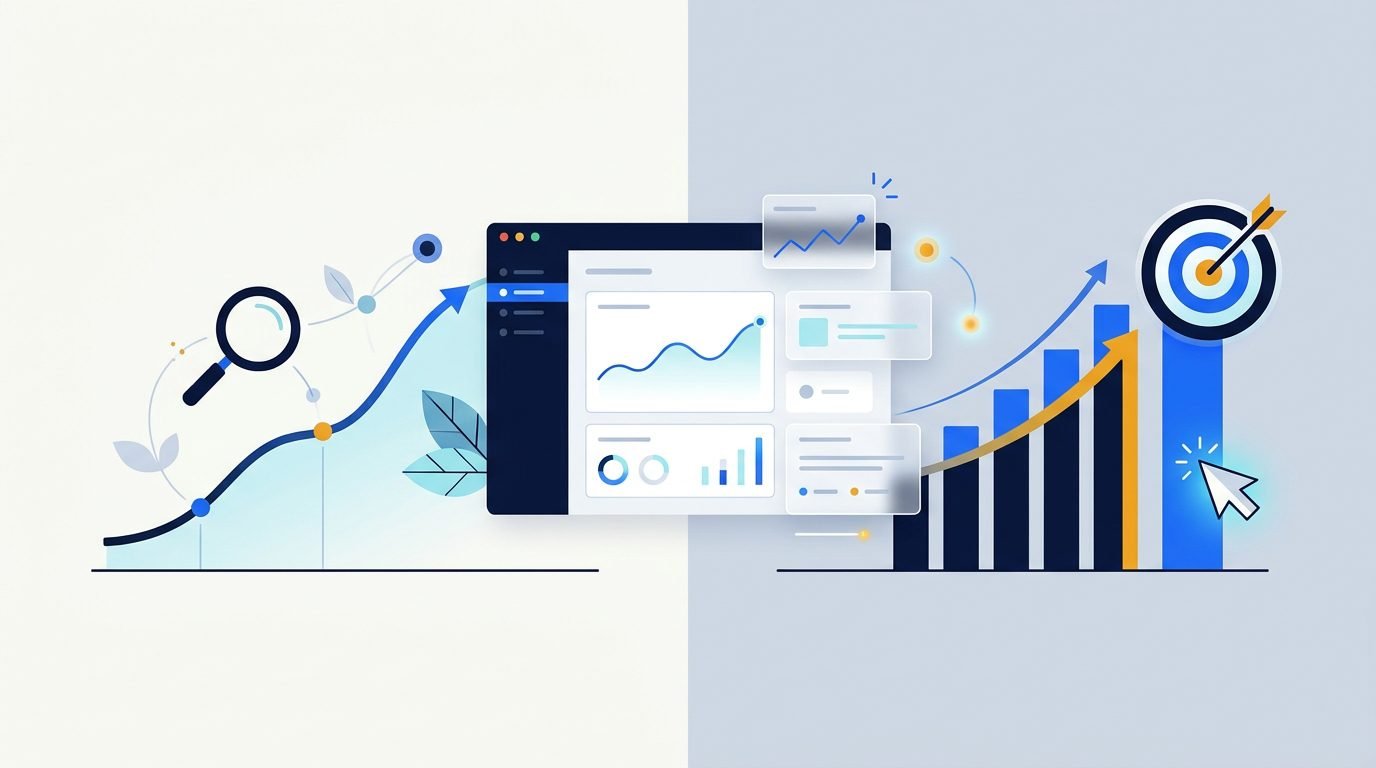
SEO vs Google Ads at a Glance: Side-by-Side Comparison
Before diving into the seven decision factors, look at how SEO vs Google Ads compare across speed, cost, sustainability, and buyer trust.
| Factor | Search Engine Optimization (SEO) | Google Ads (PPC) |
|---|---|---|
| Time to Initial Traffic | 3 to 6 months for meaningful traction | Same day after campaign approval |
| Cost Model | Time, content, and technical optimization | Pay-per-click (CPC) auction bidding |
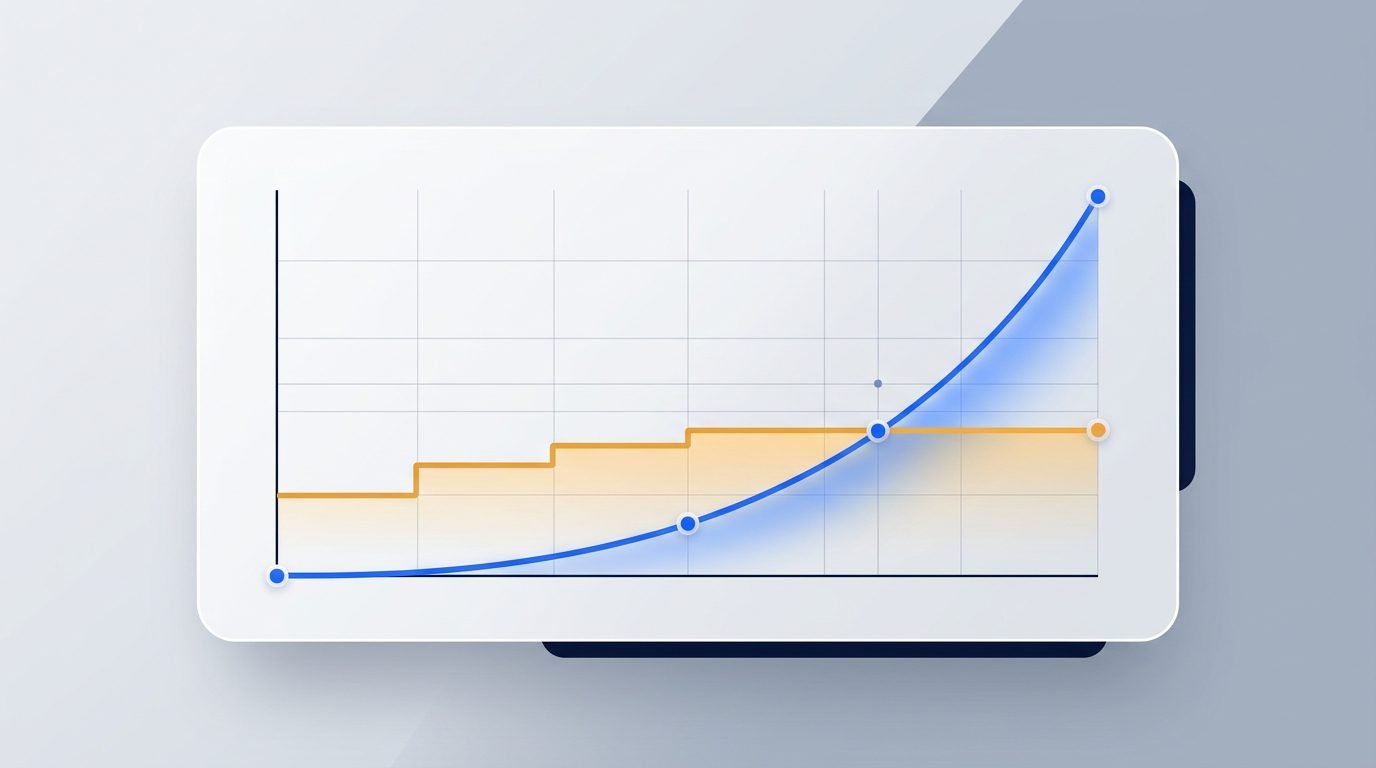
| Traffic Sustainability | Compounds even when new spend pauses | Stops immediately when budget stops |
| Targeting Precision | Keyword and content intent matching | Exact keywords, cities, schedules, devices |
| Testing Speed | Slower to validate new offers | Fastest way to test headlines and offers |
| Long-Term Cost Per Lead | Decreases over time as authority grows | Sensitive to rising auction competition |
| Best Business Stage | Long-term brand building and lower CAC | Immediate launches, seasonal offers, quick leads |
1. Speed to Leads: Immediate Launch vs. Compounding Momentum
The clearest difference in the SEO vs Google Ads equation is speed. Google Ads puts your website at the top of search results within hours of launching a well-structured campaign. If you just launched a clinic, SaaS product, or local agency and need enquiries this week, paid search delivers immediate visibility.
Because speed impacts cash flow directly, founders debating SEO vs Google Ads should always map how long they can afford to wait before a channel pays back its initial investment.
SEO operates more like building equity in real estate. Search engines need time to crawl your pages, evaluate technical quality, assess user engagement, and verify authority signals before ranking your site on page one for competitive commercial keywords.
How Timeline Affects Business Planning
- Need pipeline in 7–14 days: Google Ads wins easily for immediate demand capture and fast offer validation.
- Planning 6–24 months ahead: SEO builds compounding organic assets that reduce your dependence on rising ad costs.
- Launching in a competitive metro market: Using paid search for short-term revenue while investing steadily in organic content avoids the “wait six months with zero leads” trap.
2. Cost Structure and Return on Investment Over Time
Many business owners mistakenly think SEO is “free” and Google Ads is “expensive.” In reality, both require real investment—just structured differently. Understanding true unit economics helps you evaluate SEO vs Google Ads accurately.
With Google Ads, your primary expense is direct media spend paid to Google every time a searcher clicks your ad, alongside campaign management and landing page optimization. Your cost per lead depends on auction competition, Quality Score, and landing page conversion rate.
With SEO, there is no per-click fee paid to Google. Your investment goes into technical site health, local optimization, authoritative content, and digital PR. Early on, your effective cost per organic lead may look high because results take months to build. By month nine or twelve, however, top-ranking pages continue attracting leads every day at a declining marginal cost.
Questions to Ask About Your Marketing Budget
- What is your average customer lifetime value? Higher-ticket services (clinics, legal, B2B retainers, real estate, home renovation) can comfortably afford higher Google Ads click prices while building SEO in parallel.
- How steady is your monthly budget? If you can sustain investment for at least six months, SEO delivers remarkable compounding ROI; if cash is tight and you must see direct return within 30 days, Google Ads provides faster feedback.
3. Search Click Share, Credibility, and Buyer Psychology
Modern search engine results pages look very different than they did years ago. At the top sit sponsored text or shopping ads, followed by local map listings, “People also ask” boxes, and organic blue links.
When comparing SEO vs Google Ads, pay attention to how different buyers behave on the same results page:
- Urgent buyers click top ads: Someone locked out of their home or needing urgent AC repair often calls the first credible result at the very top, even if it carries a “Sponsored” label.
- Research-oriented buyers trust organic rankings: B2B decision-makers and thoughtful shoppers frequently scroll past ads to read educational guides, reviews, and organic listings because ranking naturally signals authority.
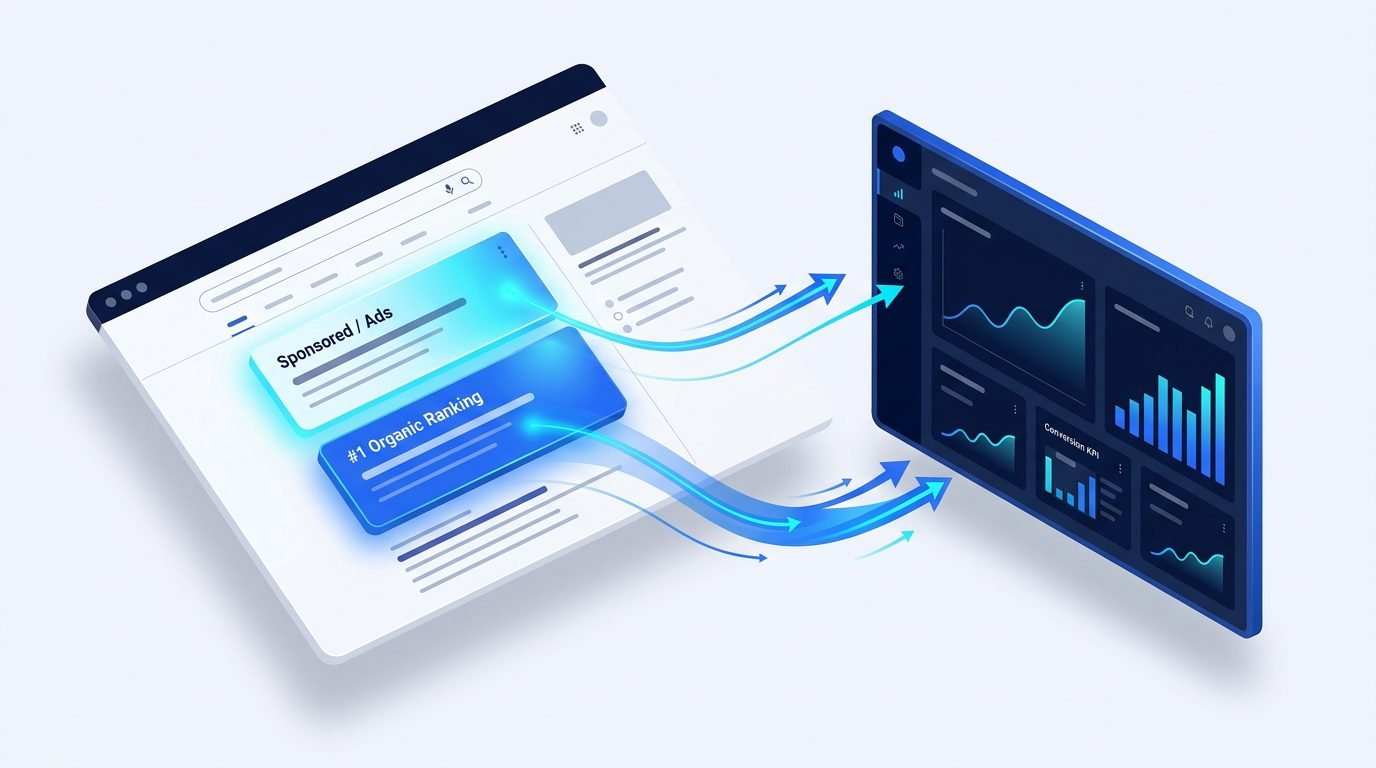
- Double visibility wins the tie: When your brand appears in both the sponsored slot and the top organic or Map Pack position, prospects recognize your name twice—dramatically lifting trust and overall conversion rate.
If your website still lacks clear service pages or modern credibility, reviewing why businesses need a strong website is step one in any SEO vs Google Ads decision before sending organic or paid search visitors to your domain.
4. Targeting Control and Offer Validation Speed
Suppose your business launches a brand-new service package or enters a new neighbourhood next Monday. With SEO, targeting a new keyword cluster and waiting for Google to index, test, and rank your new landing page takes weeks or months.
With Google Ads, you gain surgical control within minutes. That agility is a huge advantage in the SEO vs Google Ads comparison whenever you need rapid market feedback:
- Test pricing and messaging fast: Run two landing page variants or two value propositions in Google Ads to see which headline converts visitors at a higher rate.
- Control geography down to pin codes: Direct budget exclusively toward high-value neighbourhoods or business districts during specific hours of the day.
- Feed winning data back to SEO: Once paid search reveals which exact search phrases turn into paying customers—not just traffic—you can prioritize those proven keywords in your organic content roadmap.
Think of Google Ads as your fast market laboratory and SEO as your permanent publishing engine. Combining both perspectives transforms the SEO vs Google Ads question from a budget debate into a repeatable growth flywheel.
Whenever you revisit SEO vs Google Ads during quarterly planning, ask which channel can validate your next offer fastest and which pages deserve long-term organic investment.
5. Vulnerability to Competition and Algorithm Shifts
Neither channel is completely risk-free, and understanding each channel’s vulnerability is essential before putting 100% of your eggs in one basket. Evaluating risk in SEO vs Google Ads keeps your lead pipeline resilient.
In Google Ads, your biggest risk is auction inflation. As more funded competitors enter your niche and bid on the same commercial keywords, cost per click rises year after year. If you ever reduce ad spend during a slow quarter, incoming leads drop instantly to zero.
In SEO, your biggest risk is Google core algorithm updates and shifting SERP layouts. However, websites built around genuine helpfulness, clear technical architecture, real customer reviews, and Google’s helpful content standards weather updates far better than thin, shortcut-driven sites.
How to De-Risk Your Search Acquisition
- Never rely on one keyword or one traffic source: Diversify across commercial service pages, local Map Pack visibility, educational blog guides, and paid search.
- Capture first-party leads: Turn anonymous search visitors into email subscribers, WhatsApp contacts, or consultation bookings so you own the relationship.
6. When to Choose SEO First vs. Google Ads First
Still unsure where to place your first marketing rupee? Use these real-world business scenarios to resolve SEO vs Google Ads based on your current stage rather than generic internet advice.
Choose Google Ads First If:
- You are a newly launched business with zero brand awareness and need calls or bookings this month.
- You offer high-ticket or urgent services where one converted customer pays for weeks of ad spend.
- You are promoting a time-sensitive seasonal offer, workshop, or product launch.
- You want to validate which service angle converts before investing months into content production.
Choose SEO First If:
- Click prices in your industry are so expensive that your unit economics struggle to break even on cold paid clicks alone.
- Your customers have a longer research journey and read comparison guides, checklists, and FAQs before buying.
- You run a local business that can win relatively fast traction through Google Business Profile optimization and local city pages.
- You want to build a durable marketing asset that continues generating enquiries without constant ad billing.
7. The Hybrid Playbook: How SEO and Google Ads Multiply Each Other
The highest-performing businesses rarely treat SEO vs Google Ads as an “either/or” battle. Instead, they combine both channels into a unified search strategy where paid data accelerates organic growth and organic authority lowers paid acquisition costs.
A Practical 90-Day Hybrid Search Roadmap
- Days 1–30 (Foundation + Fast Validation): Audit technical site health, optimize your Google Business Profile, publish clear service landing pages, set up conversion tracking in Google Analytics 4, and launch a tightly targeted Search campaign for your highest-margin service.
- Days 31–60 (Data-Driven Expansion): Review your Google Ads Search Terms report to see which exact queries convert into qualified leads. Build dedicated SEO pages and in-depth blog guides around those proven topics while trimming wasted paid keywords.
- Days 61–90 (Compound & Retarget): Strengthen internal links between educational articles and service pages, earn local reviews and citations, and add low-cost retargeting via Meta Ads so organic and paid visitors who leave without booking see your brand again.
You can explore additional tactical steps inside our guide to performance marketing and our online growth playbook for Delhi businesses as you refine your SEO vs Google Ads roadmap.
Real-World Scenarios: How Different Businesses Balance SEO vs Google Ads
Abstract advice rarely helps when you are deciding where to put next month’s marketing budget. Look at how three common business types apply SEO vs Google Ads in real life.
Scenario 1: A New Local Clinic or Home Service Provider
A newly opened dental clinic or home repair service needs appointment calls immediately to cover rent and payroll. In this case, SEO vs Google Ads starts 70% toward Google Search Ads targeting high-intent neighbourhood keywords and 30% toward Google Business Profile optimization, local service pages, and customer reviews.
By month four, as Maps visibility and organic local rankings strengthen, the clinic lowers its reliance on expensive emergency keywords while keeping paid search active for high-margin treatments.
Scenario 2: A B2B Agency, Consultant, or SaaS Startup
B2B buyers research thoroughly before booking a discovery call. Here, SEO vs Google Ads works best as a balanced 50/50 split: Google Ads captures buyers searching “hire [service] agency” right now, while in-depth SEO guides, comparison articles, and checklists capture decision-makers earlier in their research cycle.
Scenario 3: A Bootstrapped Brand With Tight Cash Flow
When media budget is very small, pouring Rs. 300/day into hyper-competitive Google Ads auctions can vanish in a handful of clicks. In that stage of SEO vs Google Ads, focus 80% of your effort on low-competition long-tail SEO pages, Google Business Profile updates, and helpful community content, reserving small paid budgets solely for retargeting or ultra-specific local keywords.
Monthly Review Checklist for Your SEO vs Google Ads Mix
To keep your budget working efficiently, review your SEO vs Google Ads metrics side by side at the end of every month:
- Compare qualified cost per lead by channel: Measure real sales conversations rather than raw clicks or impressions.
- Audit top converting paid search terms: Check whether you already have dedicated SEO pages targeting your best-converting Google Ads keywords.
- Check branded search growth: Watch Google Search Console to see if more people search your brand name directly after seeing your ads and organic guides.
- Review landing page conversion rate: Improve headline clarity, speed, and mobile CTAs so both SEO and Google Ads convert a higher share of visitors.
Common Mistakes When Managing SEO vs Google Ads
Even with a solid plan, many teams undermine their own results by making avoidable strategic errors in SEO vs Google Ads:
- Assuming paid ads boost organic rankings: Running Google Ads does not directly raise your organic SEO rank—Google keeps ad auctions and organic ranking algorithms separate. However, ads help you discover high-converting keywords and build brand searches that indirectly support growth.
- Measuring clicks instead of qualified leads: A thousand cheap blog clicks mean little if none match buyer intent; likewise, cheap PPC clicks without conversion tracking simply burn cash.
- Sending traffic to slow or unclear pages: Both Google Ads Quality Score and organic user engagement suffer when landing pages load slowly or hide your core offer.
How The MetaScale Aligns SEO and Google Ads for Your Business
At The MetaScale, we never force clients into a one-size-fits-all channel. Our team blends technical SEO, conversion-focused digital marketing services, and disciplined Google Ads and Meta Ads management around your budget, sales cycle, and revenue goals.
If you want clarity on where your next marketing investment will produce the strongest return, contact The MetaScale or learn how our digital marketing agency in Delhi NCR builds measurable organic and paid growth systems.
Frequently Asked Questions About SEO vs Google Ads
Which is better for a small business: SEO vs Google Ads?
Neither is universally better because they serve different timelines. Google Ads is better when you need immediate leads and quick offer testing, while SEO is better for building long-term, compounding organic traffic with lower cost per lead over time. Most growing businesses benefit from starting paid search for quick traction while steadily investing in SEO.
Does running Google Ads improve my organic SEO rankings?
No, spending money on Google Ads does not directly increase your organic search rankings. However, Google Ads gives you valuable keyword conversion data and increases brand familiarity, which can improve click-through rates when users later see your organic listings.
How should a startup split its budget between SEO vs Google Ads?
A practical starting split for startups needing pipeline quickly is roughly 60% toward focused Google Search Ads on high-intent commercial keywords and 40% toward foundational SEO, service pages, and local visibility—gradually shifting more weight toward SEO as organic leads scale.
Why do people skip Google Ads and click organic results instead?
Many searchers trust organic rankings for research-heavy queries because organic positions are earned through relevance and authority rather than paid placement. Appearing in both sponsored ads and top organic results gives your business maximum credibility and click share.
Conclusion
The smartest way to settle SEO vs Google Ads is to stop viewing them as rivals and start using them as complementary stages of one search strategy. Use Google Ads when you need fast enquiries, geographic precision, and rapid conversion feedback; invest in SEO so every month of work builds lasting authority that lowers future acquisition costs.
Evaluate your cash flow timeline, customer value, and internal capacity today, pick your starting SEO vs Google Ads balance, and track every enquiry back to its source so your search strategy grows smarter every quarter.
