
A clear social media marketing strategy for startups turns random posting into a repeatable system for brand awareness, audience trust, and qualified business enquiries. Early-stage founders often open accounts on four or five platforms at once, publish sporadic updates whenever they find spare time, and feel frustrated when likes do not translate into customers.
Startups rarely have enterprise budgets or dedicated creative departments. That is exactly why your social presence needs sharper positioning, fewer platforms executed consistently, and a direct bridge from content to real conversations.
In this step-by-step guide, we outline an actionable eight-step social media marketing strategy for startups built to help new and growing brands attract the right audience, build credibility quickly, and convert attention into measurable leads in 2026.
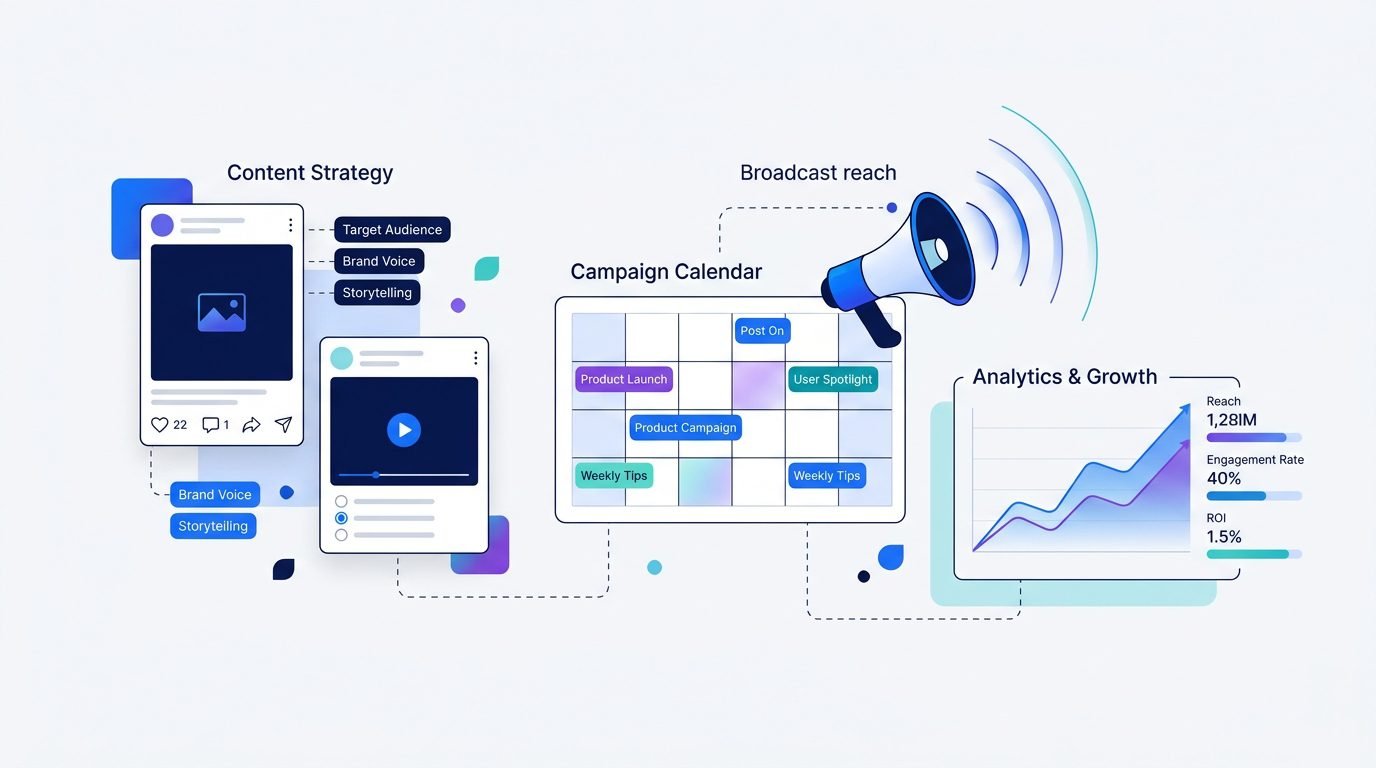
Why Every Startup Needs a Social Media Marketing Strategy
When a startup launches a new product or service, potential customers have never heard of you. Before anyone books a demo, visits your store, or requests a proposal, they check your Instagram, LinkedIn, or YouTube presence to see whether your brand looks active, credible, and aligned with their needs.
Without a documented social media marketing strategy for startups, content turns reactive—chasing short-lived trends that attract views from people who will never buy. With a focused plan, every reel, carousel, post, and story moves prospective customers closer to understanding your value and contacting your team.
Just as importantly, social media amplifies everything else you do. It supports your SEO and digital marketing services, warms up audiences before they see paid ads, and gives prospective clients real proof of how you think and work.
Weekly Content Pillar Blueprint for Startups
Consistent execution becomes much easier when you stop inventing topics from scratch each morning. Use this four-pillar framework inside your social media marketing strategy for startups to keep your feed balanced and conversion-ready.
| Content Pillar | Purpose in the Funnel | Best Formats | Target Mix |
|---|---|---|---|
| Educational & Problem-Solving | Attract target buyers via search and shares | Carousels, short reels, how-to threads | 40% |
| Proof & Behind-the-Scenes | Build credibility and show real expertise | Process breakdowns, client wins, audits | 25% |
| Founder POV & Brand Story | Differentiate from faceless competitors | Short talking-head videos, text posts | 20% |
| Direct Offer & Lead Capture | Convert warm followers into enquiries | CTA reels, case highlights, DM prompts | 15% |
1. Define One Clear Goal and Your Ideal Customer Profile
Before designing a single graphic, decide what social media must accomplish for your startup over the next 90 days. “Going viral” is not a business goal; generating consultation calls, app sign-ups, store visits, or email subscribers is.
Every effective social media marketing strategy for startups starts by narrowing your Ideal Customer Profile (ICP). Trying to speak to everyone produces generic posts that resonate with no one.
Questions to Clarify Before Posting
- Who is your primary buyer? Define their role, industry, city or region, and purchasing authority.
- What urgent problem keeps them searching? List the top five questions prospects ask on sales calls or WhatsApp chats.
- What hesitation stops them from buying? Address doubts around price, onboarding time, trust, or ROI directly in your posts.
When your bio, pinned posts, and content hooks mirror your buyer’s exact language, the right followers self-select and stick around.
2. Pick One or Two Core Platforms Instead of Being Everywhere
One of the biggest traps in a social media marketing strategy for startups is trying to publish daily across Instagram, LinkedIn, X, Facebook, YouTube, and Pinterest with a tiny team. Burnout hits within three weeks, and quality drops everywhere.
Instead, choose one primary platform where your buyers actively spend time and one secondary channel where you can repurpose content effortlessly:
- B2B, SaaS, Agencies, and Consultants: Focus primarily on LinkedIn (using LinkedIn Marketing Solutions best practices) paired with YouTube or Instagram for visual proof.
- Local Brands, D2C, Food, Fitness, and Retail: Focus primarily on Instagram Reels and Stories paired with Facebook and Google Business Profile updates.
- Education, Tech Products, and How-To Services: Pair Instagram Reels or LinkedIn with short, searchable YouTube videos that continue bringing views for months.
Posting three thoughtful pieces a week on one right platform outperforms posting rushed filler on five wrong ones. Focus is the secret multiplier inside every winning social media marketing strategy for startups.
3. Optimize Your Profiles Like High-Converting Landing Pages
When a prospect sees a helpful post and taps your profile name, you have roughly five seconds to answer three questions: What do you do, who do you help, and what should they click next?
Profile optimization is one of the fastest wins in any social media marketing strategy for startups because it immediately improves conversion rates from every single post you publish going forward.
Startup Social Profile Checklist
- Searchable name field: Include your brand name plus a clear category keyword (for example, “The MetaScale | Digital Marketing & SEO”).
- Benefit-led bio: State who you help, the outcome you deliver, and a single clear call to action.
- Clean website link: Point visitors directly to a mobile-friendly landing page or contact page rather than a confusing list of ten random links.
- Three strategic pinned posts: Pin your startup introduction (“Start Here”), a proof/process breakdown, and a direct offer or FAQ post.
4. Build Content Around Four Repeatable Pillars
Random inspiration does not scale. A sustainable social media marketing strategy for startups organizes topics around four distinct content pillars—education, proof, founder story, and offer—so your feed both attracts strangers and converts warm followers. Each pillar plays a specific role inside a balanced social media marketing strategy for startups.

How to Turn Real Customer Questions Into Weekly Posts
- Educational posts (40%): Teach frameworks, checklists, common mistakes, and “how to choose” guides that buyers bookmark and share.
- Proof posts (25%): Share step-by-step project workflows, before-and-after audits, or real customer feedback without exaggerating claims.
- Founder & team perspective (20%): Explain why you built the startup, what bad industry habits you reject, and lessons learned while serving customers.
- Offer & CTA posts (15%): Remind followers directly how they can book a consultation, claim an audit, or try your product.
If your team also publishes long-form blog articles, slice every blog post into two carousels, one short video script, and three text posts. Repurposing maximizes output without stretching your social media marketing strategy for startups thin.
5. Create a Realistic Batching Workflow You Can Sustain
Startups fail on social media not because they run out of ideas, but because daily posting collides with client work, product bugs, and operations. Consistency beats intensity every single time in a social media marketing strategy for startups.
Instead of scrambling daily, block two hours once a week (or four hours every two weeks) to script, design, and schedule your posts in batches:
- Use 3 reusable templates: Create clean branded templates for carousels, quote cards, and short video covers so design takes 15 minutes instead of two hours.
- Write hooks first: Spend half your writing energy on the opening line or first 3 seconds of video, since weak hooks prevent great insights from ever being read.
- Stick to 3–4 quality posts per week: Maintain a pace your team can uphold for six straight months without skipping weeks.
6. Build Real Engagement Loops and Direct Conversations
Social algorithms reward genuine conversations, and startups have a huge advantage over giant corporations: founders and small teams can reply personally, thoughtfully, and fast.
Treat comments and direct messages as active pipeline channels inside your social media marketing strategy for startups:
- Spend 15 minutes engaging before and after posting: Leave thoughtful comments on posts from target customers, industry peers, and complementary local businesses.
- Use keyword DM prompts naturally: Invite readers to comment a helpful word (such as “AUDIT” or “CHECKLIST”) or send a DM to receive a resource or book a quick call.
- Move warm chats to a clear next step: Answer questions helpfully in DMs without sounding pushy, then share your WhatsApp or booking link when the prospect expresses interest.
7. Connect Organic Social With Paid Meta Ads and Website Funnels
Organic reach alone can be unpredictable as platforms evolve. The fastest-growing startups pair organic content with targeted paid distribution so winning messages reach thousands of ideal buyers instead of sitting unseen.
This synergy is what elevates a basic social media marketing strategy for startups into a scalable performance marketing system.
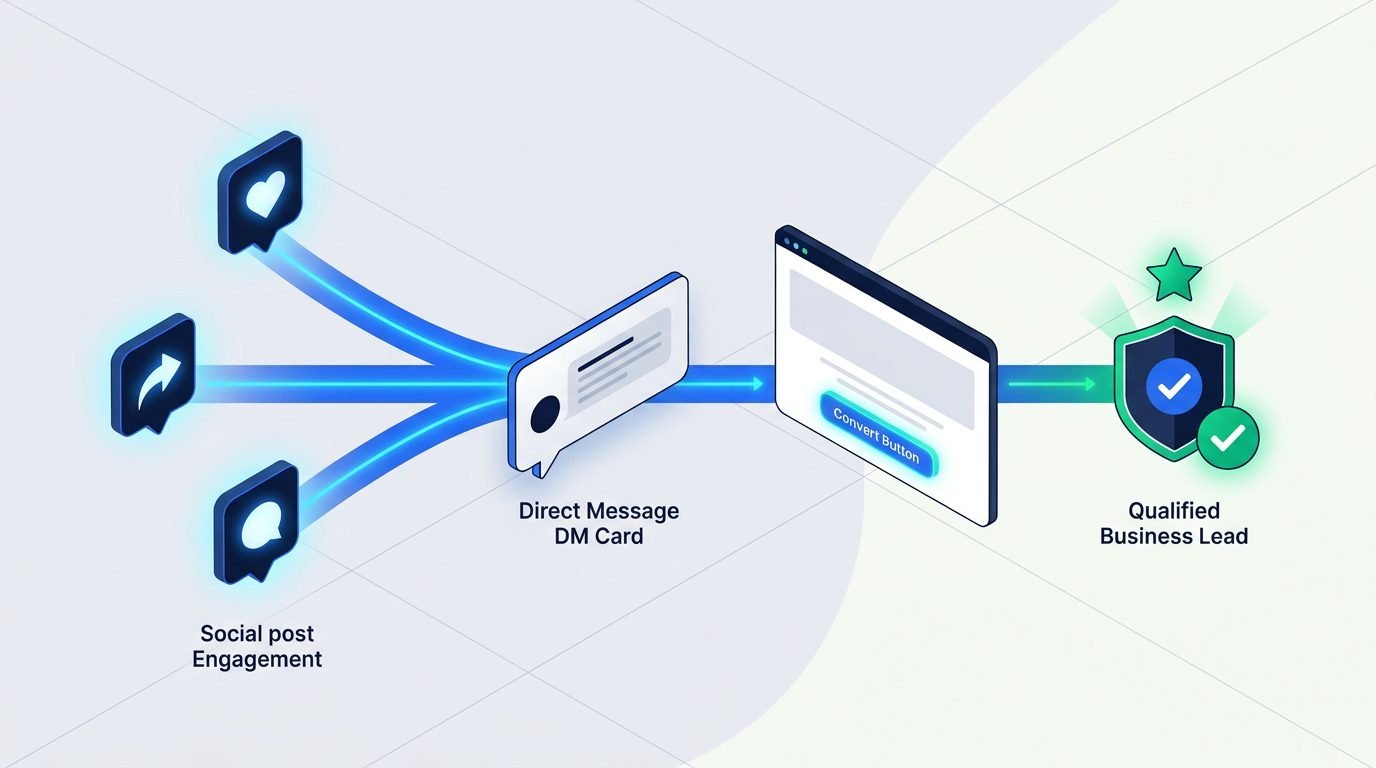
How Organic Content Feeds Paid Performance
- Test hooks organically first: Notice which reels or carousels earn the highest saves, shares, and profile visits, then turn those proven angles into Meta Ads campaigns inside Ads Manager (see Meta Business Help).
- Retarget profile engagers: Run low-budget retargeting ads to people who watched your videos, engaged with your Instagram or Facebook page, or visited your website in the last 30 days.
- Send traffic to a conversion-ready website: Make sure your business website reinforces what visitors saw on social with clear services, FAQs, and fast contact options.
For local startups, combining organic storytelling with Meta Ads for local businesses builds neighbourhood recognition much faster than relying on organic feeds alone. Together, organic trust and paid reach complete a full-funnel social media marketing strategy for startups.
8. Track Metrics That Tie Directly to Revenue
Vanity metrics—such as random follower spikes or viral views from outside your target market—often hide whether social media is actually helping your startup grow. A disciplined social media marketing strategy for startups reviews business-aligned metrics once every two weeks.
Metrics Worth Tracking Monthly
- Saves and shares per post: Strong indicators that your educational and framework content is genuinely valuable to your target audience.
- Profile visits and website link clicks: Show whether your content sparks curiosity about your startup’s offer.
- Qualified DM conversations and form leads: Use UTM tracking parameters on bio links inside Google Analytics 4 so you see exactly how many enquiries originate from social channels.
- Cost per enquiry (when boosting or running Meta Ads): Compare social lead quality and close rate alongside Google Search enquiries.
30-Day Rollout Plan for Your Social Media Marketing Strategy for Startups
Reading about a social media marketing strategy for startups is helpful, but execution in your first 30 days is what creates real momentum. Follow this simple four-week launch sequence so your team never feels stuck wondering what to publish next.
- Week 1 (Positioning & Profile Overhaul): Finalize your Ideal Customer Profile, select your 1 or 2 core platforms, rewrite your bio with a clear value proposition, set up UTM tracking on your website link, and design 3 clean visual templates.
- Week 2 (Publish Core Pinned Posts): Create and pin your three anchor posts—who you help, how your process solves a key problem, and how prospects can book a call or request a quote.
- Week 3 (Batch & Engage Consistently): Publish 3 to 4 posts covering your four content pillars, spend 15 minutes daily leaving thoughtful comments on target customer and industry posts, and reply quickly to every comment or DM.
- Week 4 (Review & Amplify Winners): Check saves, shares, profile visits, and link clicks. Identify your top-performing educational or proof post and consider putting a small Meta Ads retargeting or boost budget behind it.
Recommended Lean Tool Stack for Startup Social Teams
You do not need expensive enterprise software to run an effective social media marketing strategy for startups. A lean, affordable tool stack keeps production fast while maintaining clean branding:
- Content planning & topic bank: Use Notion, Trello, or Google Sheets to store customer FAQs, hooks, and publishing status across your four content pillars.
- Design & short-form editing: Use Canva for reusable carousel and cover templates and CapCut or native platform editors for clean captions on short vertical videos.
- Native scheduling & analytics: Use Meta Business Suite for Instagram and Facebook scheduling, LinkedIn’s native scheduler for B2B posts, and Google Analytics 4 to measure website enquiries from social traffic.
Keeping tools simple lets your startup invest time in understanding customers and sharpening your offer—the real drivers behind every successful social media marketing strategy for startups.
How to Refresh Your Social Media Marketing Strategy for Startups Quarterly
Platforms change features quickly, and your startup’s product or service positioning will evolve as you learn from customers. Every 90 days, review your social media marketing strategy for startups to drop low-performing formats and double down on topics driving real leads.
- Keep your top 20% topics: Identify the educational guides, customer questions, and case breakdowns that generated the highest saves and enquiries, and create follow-up posts around them.
- Update pinned posts and offers: Refresh your bio link, pinned introduction, and direct CTA inside your social media marketing strategy for startups whenever you launch a new service tier or seasonal offer.
- Sync with sales and SEO insights: Ask your team which objections came up most often in discovery calls and turn those answers into next quarter’s pillar posts and social media marketing strategy for startups scripts.
Common Startup Social Media Mistakes to Avoid
Avoiding common execution errors saves startups months of wasted effort when building their social media marketing strategy for startups:
- Buying fake followers or using engagement pods: Inflated numbers wreck your organic reach because platforms test new posts on your existing followers first—if fake accounts do not engage, distribution stalls.
- Posting only promotional flyers: Endless “Buy Now” or “20% Off” graphics bore followers; lead with value and weave offers in naturally.
- Quitting after 30 days: Social trust compounds through repetition. Most startups start noticing warmer inbound enquiries after 60 to 90 days of consistent, targeted publishing.
Build a Smarter Social Presence With The MetaScale
At The MetaScale, we help startups and growing businesses move beyond random posting with a cohesive social media marketing strategy for startups, SEO, and performance marketing built around real business leads.
Whether you need help structuring your startup’s content pillars, launching high-converting Meta Ads, or aligning social media with your overall online growth plan, get in touch with The MetaScale to talk through your goals.
Frequently Asked Questions About Social Media Marketing for Startups
How often should a startup post on social media?
Consistency matters far more than posting every single day. Publishing 3 to 4 well-researched, audience-focused posts per week on 1 or 2 core platforms—paired with active replies in comments and DMs—delivers stronger results than posting daily rushed content.
Which platform is best in a social media marketing strategy for startups?
The best platform depends on who buys from you. B2B and service startups typically see faster traction on LinkedIn and YouTube, while local consumer brands, D2C products, clinics, and lifestyle startups usually perform best on Instagram and Facebook paired with Meta Ads.
Should startups spend money on paid social ads or focus only on organic?
Organic content builds trust, voice, and proof, while small targeted Meta Ads budgets amplify your best posts to ideal buyers and retarget website visitors. Using organic posts to test messaging before putting ad spend behind winners gives startups the best ROI.
How long does a social media marketing strategy for startups take to generate leads?
Profile optimization and targeted Meta Ads can generate enquiries within days, whereas organic social authority typically builds noticeable inbound DM and website enquiry momentum over 60 to 90 days of consistent, buyer-focused content.
Conclusion
A winning social media marketing strategy for startups does not require a huge team or viral luck. By clarifying your ideal buyer, committing to one or two high-leverage platforms, rotating four purposeful content pillars, and connecting organic engagement with targeted Meta Ads and website tracking, social media becomes a dependable growth channel.
Audit your profile today, plan your next two weeks of buyer-focused content in one batch, and commit to your social media marketing strategy for startups for 90 days—your pipeline and brand credibility will reflect the effort.
